Periodic Table Printable
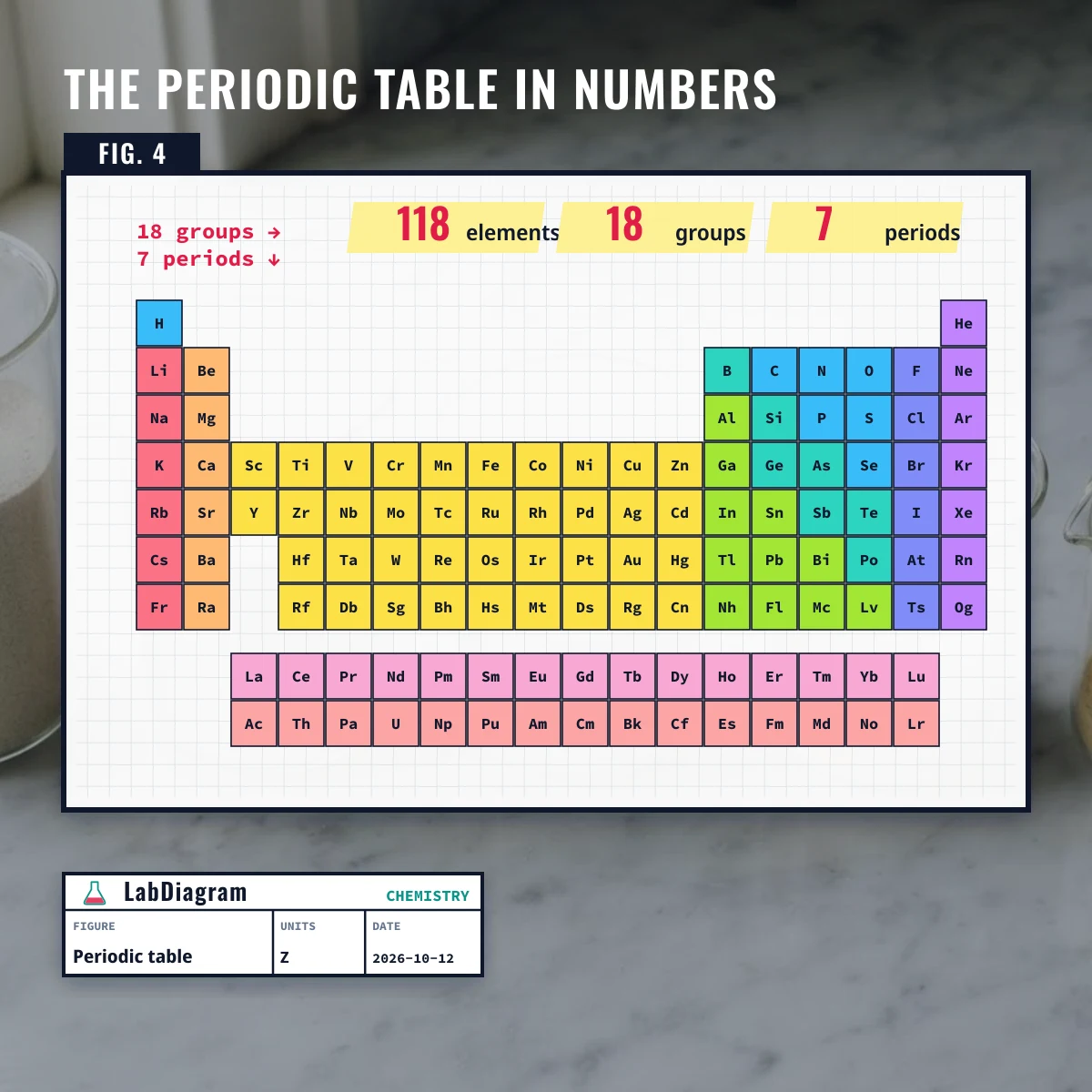
A printable periodic table lists all 118 chemical elements by atomic number, with symbols, names and atomic weights. Tap an element to see its properties, choose what to show, then print a clean copy in color or black and white. A molar mass calculator turns any formula into grams per mole.
Periodic table of the elements
Atomic weights: IUPAC 2021 (abbreviated). Values in square brackets are mass numbers of the longest-lived isotope.
| Element | Atoms | Weight | Subtotal | Mass % |
|---|
All figures
Every figure page opens with its own diagram or calculator, labeled and printable, then explains it. Entries marked “soon” are in the publishing plan and go live on their dates.
- Fig. 1Molecular weight calculatorsChemistry · soon
- Fig. 2Codon chartBiology
- Fig. 3Water cycle diagramEarth science · soon
- Fig. 4Chart of electronegativityChemistry
- Fig. 5Plot diagramLiterature · soon
- Fig. 6Tooth chartAnatomy · soon
- Fig. 7Lewis dot diagram of NO2Chemistry
- Fig. 8Printable periodic tableChemistry
- Fig. 9Photosynthesis diagramBiology · soon
- Fig. 10Back muscles diagramAnatomy · soon
- Fig. 11Diagram of a cellBiology · soon
- Fig. 12Cellular respiration diagramBiology · soon
- Fig. 13Diagram of a neuronBiology · soon
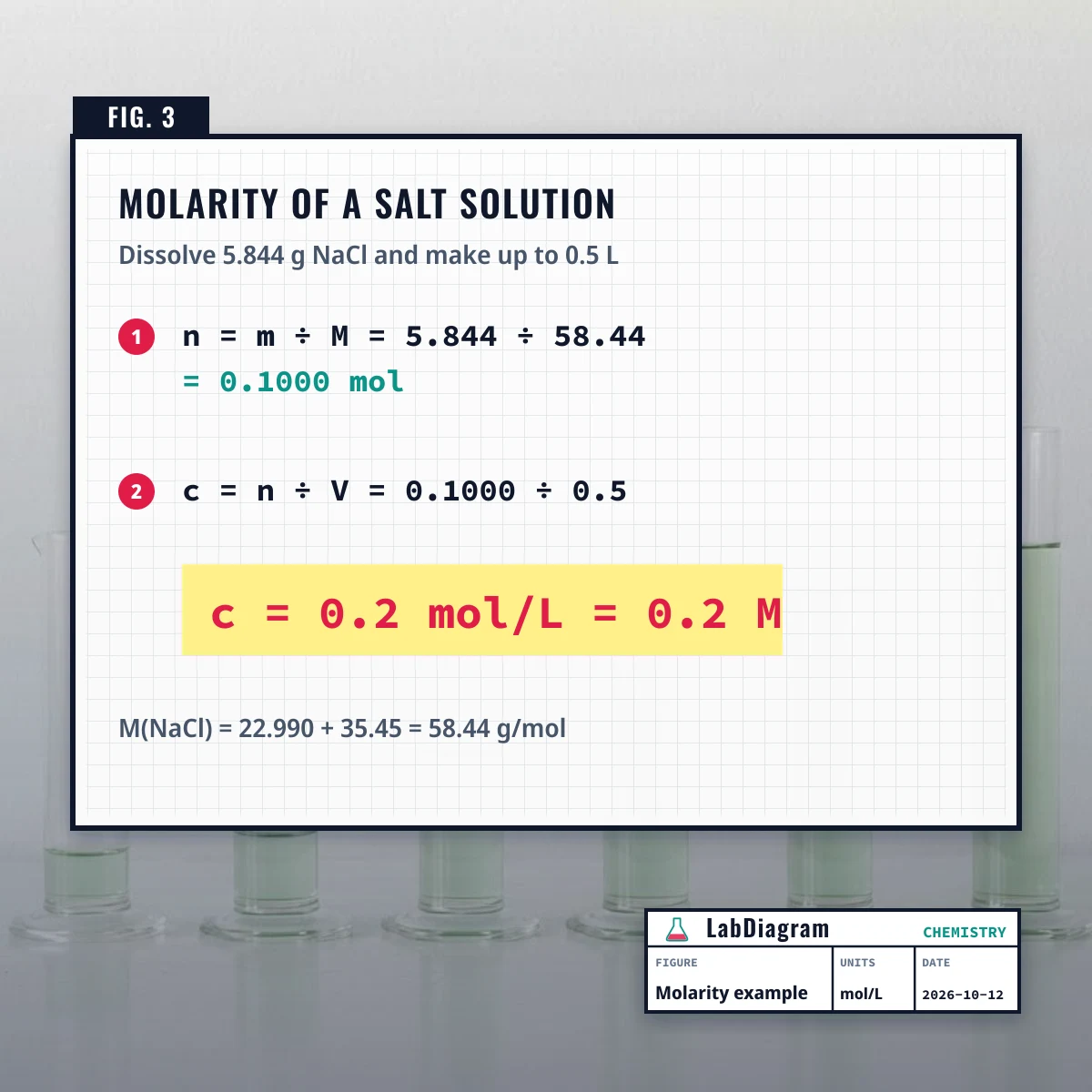
- Fig. 14Molarity calculatorChemistry
- Fig. 15Moment of inertia calculatorPhysics · soon
- Fig. 16Molecular geometry chartChemistry
- Fig. 17VSEPR theory chartChemistry
- Fig. 18Molecule shapes chartChemistry
- Fig. 19Plasma membrane diagramBiology
- Fig. 20Muscle diagramAnatomy
- Fig. 21Density calculatorPhysics
- Fig. 22Phase change diagramPhysics
- Fig. 23Chemistry chartsChemistry
How to read the periodic table
The periodic table arranges the elements by increasing atomic number. Each row is a period and each column is a group. Elements in the same group have similar outer electron arrangements, which is why they behave in similar ways: the alkali metals on the left react vigorously with water, and the noble gases on the right rarely react at all.
| Category | Where | Typical traits |
|---|---|---|
| Alkali metals | Group 1 (not hydrogen) | Soft, very reactive metals |
| Alkaline earth metals | Group 2 | Reactive metals, +2 ions |
| Transition metals | Groups 3–12 | Hard, conductive, colored compounds |
| Metalloids | Staircase between metals and nonmetals | Semiconductors such as silicon |
| Halogens | Group 17 | Reactive nonmetals that form salts |
| Noble gases | Group 18 | Colorless, almost inert gases |
| Lanthanides and actinides | The two rows below the table | Inner transition metals |
Atomic number, weight and isotopes
The atomic number is the number of protons and is what makes an atom a particular element. The atomic weight is the average mass of its atoms in unified atomic mass units, weighted by how common each isotope is in nature. That is why chlorine is listed as 35.45 rather than a whole number: natural chlorine is a mix of chlorine-35 and chlorine-37.
Printing the table
- Choose how much to show on each tile: number and symbol, with names, or with names and weights.
- Pick color for a class poster or black and white for a cheap handout.
- Press Print, choose landscape and keep the scale at 100 percent or fit to page.
- Turn off headers and footers so the sheet stays clean.
Calculating molar mass
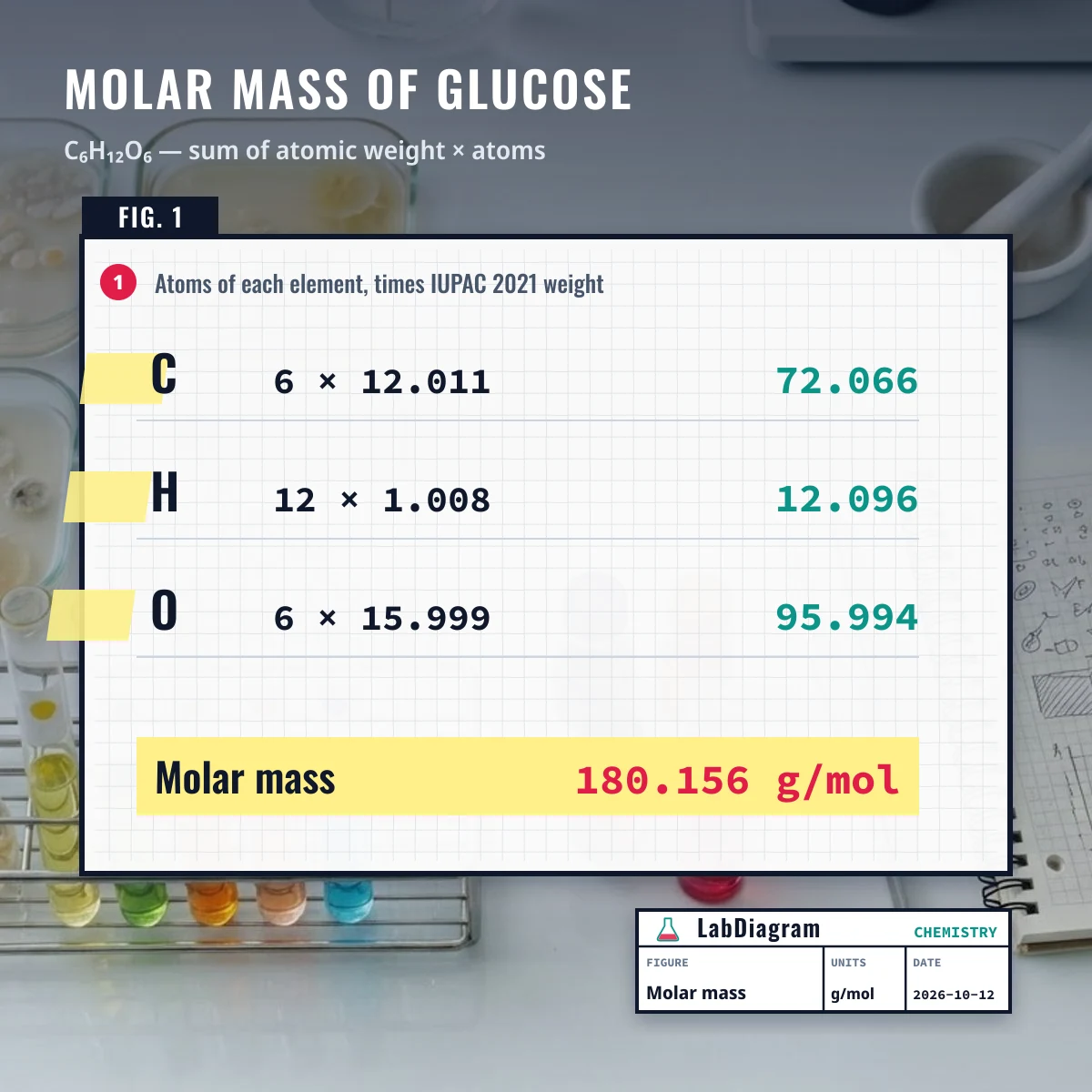
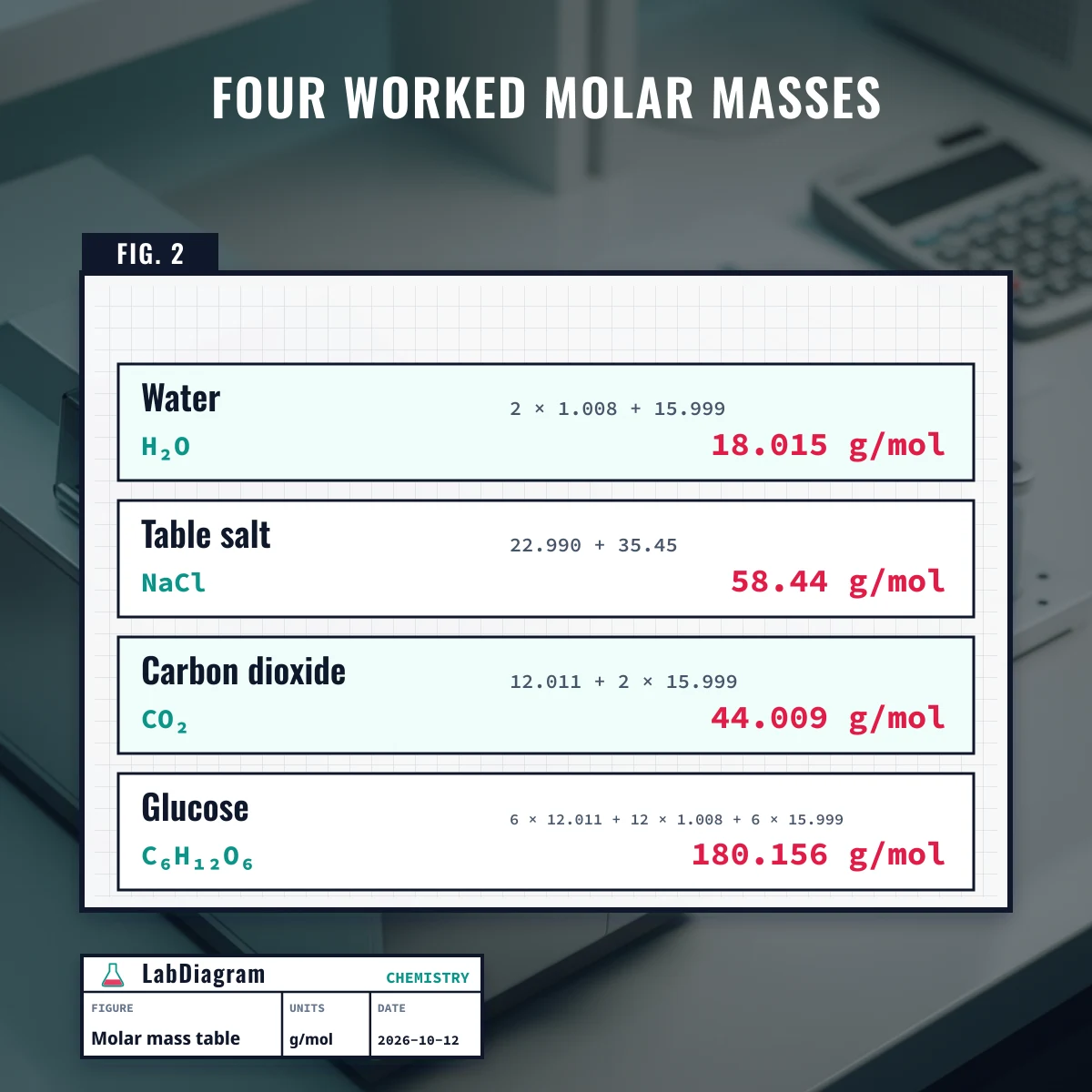
Molar mass is the mass of one mole of a substance in grams. Add the atomic weight of every atom in the formula. Worked examples using the weights above:
| Substance | Formula | Working | Molar mass |
|---|---|---|---|
| Water | H₂O | 2 × 1.008 + 15.999 | 18.015 g/mol |
| Table salt | NaCl | 22.990 + 35.45 | 58.44 g/mol |
| Carbon dioxide | CO₂ | 12.011 + 2 × 15.999 | 44.009 g/mol |
| Glucose | C₆H₁₂O₆ | 6 × 12.011 + 12 × 1.008 + 6 × 15.999 | 180.156 g/mol |
Chemical notation you will meet
Worked examples use a small set of symbols. This table says what each one means, so the formulas on the figures read the same way on your worksheet.
| Symbol | Meaning | Example |
|---|---|---|
| ₂ ₃ ₁₂ | Subscript: number of atoms of the element before it | H₂O has two hydrogen atoms; C₆H₁₂O₆ has twelve |
| · | Hydrate dot: crystals bound with water | CuSO₄·5H₂O |
| ⁺ ⁻ ²⁺ | Ion charge | Na⁺, Cl⁻, Ca²⁺ |
| → | Yields | 2H₂ + O₂ → 2H₂O |
| ⇌ | Reversible reaction | N₂ + 3H₂ ⇌ 2NH₃ |
| Δ | Change in a quantity (also heat in some equations) | ΔT = 5 °C |
| ° | Degree | 25 °C |
| ± ≈ | Plus or minus; approximately | 0.50 ± 0.01 g ≈ 0.5 g |
| α β γ | Types of radiation | Alpha, beta and gamma rays |
| µ | Micro, one millionth | 5 µg = 0.000005 g |
Frequently asked questions
How many elements are on the periodic table?
There are 118 confirmed elements, from hydrogen (atomic number 1) to oganesson (atomic number 118). Elements 1 to 94 occur naturally in some amount; the heavier ones have been made in laboratories.
What do the numbers in square brackets mean?
Elements with no stable isotope have no single standard atomic weight. IUPAC lists the mass number of the longest-lived known isotope in square brackets instead, for example technetium (mass number 98).
What is the difference between atomic number and atomic weight?
The atomic number is the count of protons in the nucleus and defines the element. The atomic weight is the average mass of the element’s atoms, weighted by its natural isotopes, in unified atomic mass units.
How do I print the periodic table so it looks clean?
Choose what to show, switch to black and white to save ink if you like, then press Print. In the print dialog choose landscape, scale 100 percent or “fit to page”, and turn off headers and footers.
How is molar mass calculated?
Add the atomic weight of every atom in the formula. For water, H₂O, that is 2 × 1.008 + 15.999 = 18.015 g/mol. Parentheses multiply what is inside, and a hydrate dot such as · 5H₂O multiplies the water part.
Is this diagram information medical or safety advice?
No. Anatomy and chemistry content here is educational. Follow your lab’s safety rules and ask a qualified professional for medical questions.
Was this figure useful?
Mark it as passed, or send it back for revision with a short note.
Recorded. Thank you for the review.